It's not about sending a message.
It's about delivering it.
Contact An Expert
Alerts & Notifications
Increase your revenue, safeguard your brand reputation and boost customer satisfaction by securing your communication from fraud.
2-Factor Authentication & OTP
Enhance your users' account security with One-Time Password. This layer of protection deters unauthorised access and builds trust.

SMS & Text Message Marketing
Reach your target audience with instant, high-impact messages. Drive conversion and foster brand loyalty with bulk send SMS.
We focus on reliable routing & high-quality delivery.

Per-client Routing
Instead of using generic routes for everyone, we route based on client-specific rules to boost delivery rates, speed, and cost efficiency.

Global Sender ID Registration
We handle global Sender ID (SID) registration, ensure local compliance everywhere. Display your brand as the sender, not a random number.
Number Validity Check
We always verify databases. Our in-house script removes invalid numbers, so you upload only reachable contacts and avoid wasted sends.

Fraud Protection built-in
We detect artificial inflation (AIT) fraud, Sender ID manipulation, phishing attempts, and other abusive traffic patterns before they impact your operations, helping reduce fraud-related losses.
Popular messaging channels:

SMS
SMS boasts nearly a 99% open rate, ensuring your messages are seen and acted on instantly, even without internet access.
RCS
Only verified businesses can communicate via Rich Communication Suite, ensuring users' piece of mind.

WhatsApp
This messenger allows communication with all types of messages, including OTP which is possible without registration.
Push Notifications
High-visibility alerts that appear on top of all screens, with accept/reject options: convenient for OTP and other time-sencitive use cases.

Telegram
Its versatile communication is perfect for businesses with an existing client database.

Flash Calls
OTP-based verification via phone calls is a fast, cost-effective, and secure alternative to traditional OTP SMS.

Fallback delivery ensures nothing gets lost
When a primary route fails, our system automatically reroutes through an alternative carrier with no action needed on your end.
Our competitive edge

Flexible Payments
We are not asking for any monthly revenue commitment. We accept crypto, pay-as-you-go, pre-payments and post-payments.
Top-notch Security
Our SMS Firewall and Fraud-protection are enabled for all clients. We never sell databases and follow strict data protection protocols.

24/7 Dedicated Support
Real-time delivery tracking, anomaly detection and full analytics. A dedicated Account Manager to resolve or prevent any issue.

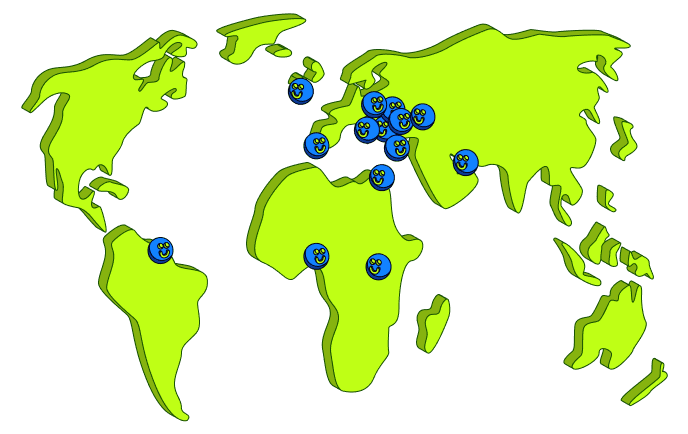
190+ Countries Covered
Direct carrier relationships in key markets across CIS and Africa, we cover European, LATAM, APAC, and other regions.

Rapid Test & Onboarding
Our fast integration gets you up and running without delays. We enable quick optimization for quality customer communication.
They trust us



















...and 100+ other companies
Let's connect in person!
If you prefer to meet in person, that's not a problem. You can speak to one of our A2P specialists at these upcoming events. Or book a call with one of our experts.

September 16-18, 2026
WWC Madrid
Meliá Castilla, Madrid

September 29-1, 2026
SBC Summit Lisbon
Feira International, Lisbon


October 19-22, 2026
WAS #24 GSMA
Aviva Stadium, Dublin


November 1-4, 2026
Middle East 2026 GCCM and SIS Summit
The Wave, Al Mouj, Muscat

November 2-5, 2026
Sigma World Summit
Fiera Roma, Rome
Who we are?
We're here to help you deliver. With a global, connected, and remote team, we've been mastering A2P Messaging for over 10 years. We excel in seamless SMS delivery that gets rapid results. Together, we can hit any telecommunication target.

Henrik
Director of Strategic Alliances and Global Relations

Drosos
Head of Carrier Operations

Vladan
Head of Region

Yury
CEO
Join our team
We're seeking energetic and dedicated individuals to become part of our Scarpel Telecom team – let's grow and innovate together!
Go to careersReach Your Audience Effortlessly With Personalized Messaging
Whether you're a solopreneur or a multi-million dollar business, SMS marketing will increase your customer's lifetime value, generate more leads, and help you grow and protect your business. Don't leave money on the table. With open rates of 99% and conversion rates of up to 40%, text messaging ensures your message is seen and acted on. It's a personal and direct way to connect with your audience that builds relationships driving loyalty and repeat business.
Book a demo10+
Years Industry
Experience
99%
SMS Open Rate
80+
Direct & Exclusive Hubs
We know all about seamless SMS delivery that gets rapid results.
Contact us
We will get back to you as soon as possible
Latest Insights
See all posts
Roman Yaroshchuk & Katsiaryna Burak16 Oct 2026
SpaceX vs mobile operators
SpaceX vs mobile operators: the fight is over who owns the customer Same satellites, three rulebooks Is SpaceX becoming a direct competitor to mobile operators? It depends on where you stand. The satellites are the same everywhere. The rules on who may use them to reach a phone are not. In the United States, the answer is moving toward yes. In May the FCC approved SpaceX's purchase of about 65 MHz of EchoStar spectrum, with the right to use it from space, from the ground or both ( Capacity ). On October 7 it cleared up to 15,000 next-generation satellites for Starlink's phone service. A day later SpaceX agreed to buy a nationwide block of 800 MHz spectrum ( Grain Management ). FCC Chair Brendan Carr said the satellite grant would "supercharge competition" ( Satnews ). In Europe, the operator stays the gatekeeper. In the UK, a satellite can use mobile frequencies only through a change to a mobile operator's licence ( ISPreview ). In Brussels, a Commission proposal would keep most of the 2 GHz mobile-satellite band for European firms and government use after current licences expire in May 2027. Non-EU players such as Starlink could bid for about a third ( Light Reading ). In the Gulf, incumbents lead. Starlink is licensed to sell broadband in the UAE, Qatar, Oman, Bahrain and Kuwait ( The National ). Satellite-to-phone service, though, is being built by local players. stc signed a ten-year, $175 million deal with AST SpaceMobile for the Middle East and North Africa ( Advanced Television ). Space42 and Viasat agreed in September to form Equatys, a shared satellite network in which operators keep their own customers ( Khaleej Times ). So the useful question is narrower. Where can a satellite company reach a phone without an operator in the middle? And what changes for the businesses that send messages to that phone? The week it got real Three events in eight days moved the US story from forecasts to filings. October 1. The satellite joint venture of AT&T, T-Mobile and Verizon started operating. Announced in May, it pools part of each carrier's spectrum into one platform that competing satellite operators can connect to. Each carrier has a board seat, and Paul Roth is interim CEO ( TmoNews ). Three companies that fight over every subscriber now share a satellite strategy. T-Mobile , Starlink's US launch partner, expects to buy most of its future satellite capacity through the venture ( Light Reading ). October 7. The FCC approved up to 15,000 satellites for the next generation of Starlink Mobile, flying at around 330 km. SpaceX says they will deliver up to 150 Mbps to an ordinary phone. The first service started with basic messaging at about 4 Mbps ( Satnews ). October 8. SpaceX agreed to buy Grain Management 's nationwide 800 MHz licences, up to 14 MHz of paired low-band spectrum. Neither side disclosed the price; the Wall Street Journal reported about $8 billion. SpaceX said the deal addresses "a critical technical gap" for Starlink Mobile. Low-band signals travel further and get through walls, and most phones already support the band ( Reuters via Stockopedia ). Investors did not wait for the FCC. In after-hours trading, AT&T fell 6.6%, T-Mobile 5.4% and Verizon 5.1% ( Reuters via Stockopedia ). It was SpaceX's fourth spectrum purchase in 13 months: two EchoStar deals ($17 billion and $2.6 billion), AWS-3 licences in two markets won at auction in June, and now 800 MHz. Together that is roughly $27.6 billion in announced and reported prices ( EchoStar , EchoStar , Light Reading ). From partner to rival SpaceX changed its message in seven months. In March, at MWC Barcelona, SpaceX renamed its Direct to Cell service Starlink Mobile and presented it as a layer that works with carrier networks rather than around them ( CSI Magazine ). Deutsche Telekom signed on as the first European customer for the next generation. In August, on its first earnings call as a public company, SpaceX named its targets. President Gwynne Shotwell called AT&T, Verizon and T-Mobile competitors, put their combined annual revenue at about $600 billion, and said she expected to "acquire quite a few of their customers" ( Mobile World Live ). For scale, Starlink Mobile earned $632 million in 2025 ( Fierce Network ). On October 8, SpaceX said the 800 MHz deal sets Starlink Mobile up to become a "major mobile carrier in the US", with satellites in space and its own network on the ground ( 9to5Mac ). Its FCC filing describes standard antennas on towers, rooftops and other structures ( The Register ). How it gets there is still open. Analysts describe three routes: 1. Wholesale access to a carrier's network, with satellites on top. CCS Insight calls this the most likely path ( CCS Insight ), but AT&T, Verizon and T-Mobile have said they are not interested ( Light Reading ). In June, Bloomberg reported preliminary talks with cable operator Charter, whose Spectrum Mobile already runs on rented network capacity ( Fortune ). 2. Buying an operator. After its June IPO, SpaceX reported about $100 billion in cash and securities ( Mobile World Live ). 3. Building its own network: satellites for coverage, 800 MHz and small cells for indoor reach. It is the slowest route, and the one SpaceX describes in its filings. The timeline keeps moving. In March, the US target for the next-generation service was mid-2027. In September, CFO Bret Johnsen set it for the first half of 2028 and said SpaceX could build ground assets or work with existing carriers ( Light Reading ). Why operators still hold the ground Satellite is strongest where towers do not pay for themselves. Cities and the inside of buildings are the opposite case. Start with spectrum. SpaceX has about 65 MHz from EchoStar and up to 14 MHz at 800 MHz. US operators hold about 1,020 MHz, according to New Street Research ( IEEE ComSoc ). CCS Insight estimates that 65 MHz supports a launch in the low tens of millions of customers. Each of the big three serves more than 100 million ( CCS Insight ). Capacity follows from that. Each next-generation satellite will have about 1,024 beams, each covering roughly 160 km². CCS Insight expects this to match or beat rural networks, but not to compete on capacity per square kilometre in cities, even outdoors. Indoor coverage is the hardest part. Signals from space struggle to get inside buildings, which is why Juniper Research calls direct-to-cell a niche service ( The Register ). The 800 MHz band is SpaceX's answer, and using it means building on the ground. Devices are another gap. Today's phones do not support the 2 GHz satellite frequencies the next generation will use, according to CCS Insight . MediaTek showed Starlink Mobile support on its M90 modem in March but named no handsets or dates ( Wccftech ). And demand is still small. Satellite traffic is 0.0002% of T-Mobile 's network usage, 0.0003% at the summer peak ( Light Reading ). T-Mobile CFO Peter Osvaldik said the physics do not allow direct-to-cell to replace a terrestrial network ( Light Reading ). After the Grain deal, a Verizon spokesman put it this way: "This company can have tons of spectrum available, but if they do not have the network to use it, it doesn't matter" ( Reuters via Stockopedia ). None of these gaps is permanent. Each takes time to close, and SpaceX's own US launch date has already moved twice. Partner and rival at once Several of the largest operators that buy Starlink Mobile are also building ways not to depend on it. T-Mobile launched SpaceX's first commercial phone service in the US, and its exclusivity runs into 2027. It also co-founded the carrier venture through which it expects to buy most future satellite capacity ( Light Reading ). Deutsche Telekom will sell the next generation of Starlink Mobile in 10 European countries from early 2028 ( Deutsche Telekom ). In September, Bloomberg reported that it was in early talks with Orange, Telefónica and Vodafone on a joint bid for EU satellite spectrum to run their own service ( Light Reading ). Veon signed Starlink's largest operator deal in November 2025, covering more than 150 million potential customers, and kept it non-exclusive ( Reuters via Yahoo Finance ). The alternatives all sell through operators. AT&T and Verizon back AST SpaceMobile , which had 13 satellites in orbit in August and expects continuous US coverage in early 2027 ( GCN ). Amazon is buying Globalstar and taking over Apple's iPhone satellite features, with a new phone-to-satellite system planned from 2028 ( Globalstar ). Equatys is built as a shared tower company in space, where operators keep their customers ( Khaleej Times ). SpaceX even launches some of its rivals. AST's BlueBird satellites 8 to 13 flew on Falcon 9 rockets this summer ( AST SpaceMobile ). The real contest: who owns the customer Towers can be leased or sold. What operators guard is the customer: the SIM in the phone and the bill at the end of the month. Today Starlink Mobile sits behind that relationship. The phone shows " T-Mobile SpaceX" in the US or "Beeline Starlink" in Kazakhstan, and the operator sends the bill ( T-Mobile , Zakon.kz ). The wholesale money is modest. Analyst Tim Farrar estimates T-Mobile pays $1 to $2 per monthly active user, and argues a fair price would be tens of cents per customer ( Advanced Television ). SpaceX wants a bigger share. Musk has said one Starlink account should work at home and on the phone ( Advanced Television ). Starlink already bills 12 million broadband subscribers, at an average of $66 a month ( CCS Insight ). William Blair analysts expect a broadband and mobile bundle ( Reuters via Stockopedia ). How far that goes depends on the rulebook. In the US, SpaceX owns spectrum it can use without a carrier. In the UK, satellite service runs under an operator's licence. In the EU, the proposed 2 GHz rules favour European bidders. In the Gulf, incumbent operators and regional satellite firms lead. The same company can be a supplier in Germany and a would-be rival in the US. So "will SpaceX kill mobile operators?" is the wrong question. The useful one is who will own the subscriber in each market, and on what terms. What it means for business messaging Text messages were the first thing satellites delivered to ordinary phones, and they still work best. Starlink's phone service began with text ( Fierce Network ). T-Satellite now carries SMS, MMS and RCS, plus apps such as WhatsApp ( T-Mobile ). For companies that send login codes, alerts and service messages, three things change. 1. Users in dead zones become reachable. On September 28, Beeline launched Starlink Mobile in Kazakhstan for mountains, remote areas and highways, starting with SMS and basic internet on Android phones ( Zakon.kz ). A code sent to a driver on a remote highway can now arrive where there was no signal before. 2. Delivery gets slower and less predictable. T-Mobile warns that satellite messages may take longer and that service can have gaps or time-outs ( T-Mobile ). One-time codes expire, so resend rules and code lifetimes built for terrestrial networks deserve a second look. 3. "Delivered" can mean less. A network may accept a message while the phone waits for the next satellite pass. Senders who already get delivery reports for messages that never arrived will need proof of what actually reached the handset, by country and by network. For now, the operator still delivers. In every live market the satellite is a radio layer of the local operator, so business messages reach the subscriber through that operator. That changes if Starlink Mobile sells its own lines: it becomes a new destination network with its own subscribers. According to Recon Analytics founder Roger Entner, SpaceX has held its own mobile network code, 901-08, since February 2024 ( Light Reading ). For teams sending into Central Asia, the satellite layer is already live. We run direct operator connections across the Caucasus and Central Asia, and our advice is practical: check how your login-code flow behaves for users on satellite coverage, compare provider reports with what arrives on real handsets, and keep a messenger fallback where SMS is slow. Test your route in Central Asia before your campaign. What to watch October 29, 2026 : FCC vote on adding 482 MHz for satellite coverage of phones, and on auctioning 25 MHz usable from the ground, from space or both ( TelecomsTechNews ). No date yet : FCC approval of the Grain licence transfer to SpaceX ( Grain Management ). Late 2026 to early 2027 : AST SpaceMobile beta with AT&T and Verizon, then continuous US coverage ( GCN ). 2027 : T-Mobile 's Starlink exclusivity ends, and SpaceX starts launching next-generation phone satellites on Starship ( Light Reading , Light Reading ). 2027 : WRC-27 decides on new global satellite allocations for phones ( UCC ). May 2027 : current EU 2 GHz satellite licences expire, and new rules decide how much Starlink can bid for ( TNW ). By July 2027 : US upper C-band auction, where analysts expect SpaceX to bid ( Light Reading ). November 30, 2027 : target date for SpaceX to take ownership of the EchoStar spectrum ( EchoStar ). Early 2028 : Deutsche Telekom launches the next generation of Starlink Mobile in Europe, and SpaceX targets full 5G-quality service in the US in the first half of the year ( Deutsche Telekom , Light Reading ). Frequently Asked Questions Is SpaceX becoming a mobile operator? In the US, it is moving that way. SpaceX owns about 65 MHz of EchoStar spectrum that it may use from space and from the ground, agreed on October 8, 2026 to buy up to 14 MHz of 800 MHz spectrum, and says Starlink Mobile can become a major US carrier. It does not yet sell its own mobile lines. What did SpaceX buy from Grain Management? Nationwide 800 MHz licences, up to 14 MHz of paired low-band spectrum, announced on October 8, 2026. The price was not disclosed; the Wall Street Journal reported about $8 billion. The deal needs FCC approval. Can satellites replace mobile networks? Not in cities or indoors with current technology. Satellite capacity per square kilometre is far below that of terrestrial networks, and signals from space do not reach well inside buildings. Satellite fills coverage gaps. Does Starlink Mobile work in Europe and the Middle East? In Europe it works through operators: O2 in the UK since February 2026, and Deutsche Telekom from early 2028. We found no announced Starlink Mobile operator partnership in the Gulf as of October 2026; stc works with AST SpaceMobile , and Space42 with Viasat. Can SMS and one-time codes reach phones over Starlink? Yes, where the user's operator offers a Starlink layer. T-Satellite in the US supports SMS, MMS and RCS, and Beeline launched SMS over Starlink in Kazakhstan on September 28, 2026. Messages can take longer to arrive than on a terrestrial network.

Roman Yaroshchuk & Katsiaryna Burak14 Jul 2026
Guide to Ukranian SMS market
Ukraine SMS Market: A Practical A2P Guide for Senders Your OTP can show "Delivered" while the customer never receives it. This happens in Ukraine more often than many international senders expect. Ukraine is one of Europe's most heavily filtered A2P SMS markets, where route quality, sender registration, and operator policies determine whether your message actually reaches the handset. This guide covers what you actually need to know before sending A2P SMS into Ukraine. No theory. Just the parts that affect whether your messages arrive. Key Takeaways Three operators carry almost everything. Kyivstar (~47%), Vodafone Ukraine, and lifecell control over 95% of subscriptions. Direct connectivity to all three matters. Sender ID registration is required in practice. Alphanumeric IDs with your brand name work. Numeric IDs, short codes, and two-way SMS generally do not. Delivery receipts are not proof of delivery. Firewall blocking can happen after a message is accepted, so track OTP completion, not just DLRs. Grey routes are unstable and unsafe for OTP. They degrade within weeks and overwrite sender IDs. Enforcement is tightening. Resolution No. 761 (October 2025) gave operators authority to block unregistered traffic, starting with calls. Treat Ukraine as Tier-1, not low-cost. Indicative A2P pricing runs 0.04 to 0.08 USD per message on clean routes. Who Do You Actually Reach When You Send SMS to Ukraine? Almost all A2P SMS in Ukraine terminates on three mobile networks that together hold over 95% of subscriptions [https://blog.telegeography.com/ukraines-telecom-market-explained]. If your provider is not directly connected to all three, part of your audience is unreachable on quality routes. Kyivstar: the market leader Kyivstar is Ukraine's leading operator, with roughly 47% of subscriptions and 22.4 million mobile customers at the end of 2025. It has the deepest enterprise relationships and the strongest coverage, reporting 4G access for 96.2% of the population in government-controlled territory at the start of 2026, after adding 630 communities and over 6,000 base stations in 2025. Vodafone Ukraine: strong second Vodafone Ukraine holds around 30% of the market, with roughly 15 to 16 million subscribers and strong urban performance. lifecell: the converged challenger lifecell is the smallest of the three, with roughly 15 to 20% share. Since late 2024 it has been owned by Xavier Niel's NJJ group rather than Turkcell, and it is positioning as a converged mobile and fixed challenger, which makes it more aggressive on digital services. MVNOs such as Lycamobile exist, but they ride on the host networks and do not offer an independent A2P termination path. When you evaluate a provider, ask for operator-level routing clarity, not just "Ukraine coverage." In a market split three ways, a missing operator agreement means a large share of your audience may not receive your messages, and you may not know it from your delivery reports. Coverage quality is not the bottleneck in Ukraine. Filtering is. Is the Ukraine Mobile Market Growing or Shrinking? The subscriber base is shrinking, but SMS relevance is not. Ukraine had an estimated 47.5 million mobile subscriptions at the end of June 2025, down from 48.8 million in January and 50.0 million at the end of 2023, driven by wartime displacement and emigration. A smaller base often raises message criticality rather than lowering it. When banking, account recovery, and government services stay tied to a mobile number, each remaining number carries heavier authentication load. In Ukraine, the reliability of OTP and transactional flows matters more than raw volume. Who Regulates SMS in Ukraine, and What Changed Recently? Ukraine's telecom regulator is the National Commission for the State Regulation of Electronic Communications, Radio Frequency Spectrum and the Provision of Postal Services (NCEC). It works under the Law "On Electronic Communications" and is aligning with EU practice through its cooperation with BEREC. The bigger shift for messaging is enforcement culture. In 2025 the government adopted Resolution No. 761, approved on 25 June and enacted on 2 October 2025, which for the first time let operators automatically block mass advertising and fraudulent calls. Businesses that call customers now have to register official numbers with the operator, and calls from unregistered numbers are blocked. Resolution 761 targets voice, but it signals the direction for SMS. Once operators are authorized to block unregistered traffic at network level, the same identity-and-consent logic spreads to messaging. The tolerance for weak sender identity, vague marketing, and unsolicited bulk is falling across every channel. Do You Need to Register a Sender ID to Send SMS in Ukraine? Yes, in practice. Ukraine is stricter on sender identity than most Central Asian markets. Alphanumeric sender IDs are supported, up to 11 characters, and should carry your brand name. Numeric sender IDs are generally not supported for standard A2P and may be rewritten or dropped. Short codes are not supported, and two-way SMS is not available through most major A2P channels, so do not design flows that expect replies. Generic sender IDs such as INFO, SMS, or NOTICE are prohibited, and marketing traffic requires handset-user opt-in [https://api.support.vonage.com/hc/en-us/articles/204017503-Ukraine-SMS-Features-and-Restrictions]. Unregistered senders are frequently filtered or replaced with a numeric code, which destroys brand recognition. Registration typically requires: Sender ID (brand name, up to 11 characters) Use case classification (OTP, transactional, or marketing) Message templates , especially for OTP flows Company documentation (legal entity, website, country) Expected volumes per day or month Operators increasingly separate traffic by priority: OTP and authentication get the best treatment when compliant, transactional alerts are stable but monitored, and promotional is the most filtered. Register separate identities for OTP and marketing before launch. Mixing them under one sender ID raises blocking risk. Should You Worry About Grey Routes in Ukraine? Yes, and mainly as a risk to avoid. Grey routes look cheap but are unstable and unsafe for critical traffic. Operators run firewall and filtering layers, SIM-box detection is aggressive, and traffic patterns such as high throughput, repeated templates, and foreign-origin signaling trigger blocking. In practice, three things happen on grey routes: a route that works today can degrade within weeks, delivery reports can show "delivered" while the message never reaches the handset, and sender IDs are often overwritten. For OTP or fintech traffic, grey routing is not viable in Ukraine. If a provider offers a single flat rate well below market, it almost always implies indirect or grey routing. What Can You Actually Say in an SMS to Ukraine? Keep it short, branded, and free of anything that resembles fraud. Content sensitivity is higher than in most markets because of the war and a long-standing phishing problem. Users are trained to distrust unexpected links and requests, so your message is judged not only on deliverability but on whether it could look like a scam. Expect heavy scrutiny of political messaging, anything resembling official communications, donation or financial appeals, shortened URLs, and non-branded domains. For fintech and banking, name the brand clearly, avoid vague urgency like "confirm immediately," and keep OTP messages minimal. An effective OTP format looks like this: Your [Brand] code: 482913. Do not share. Anything longer or more complex increases filtering probability. Avoid URL shorteners. If a link is required, use a branded domain. Why Do Your SMS Show "Delivered" but Never Arrive in Ukraine? Because delivery receipts (DLRs) are not a reliable proxy for handset delivery in Ukraine. Firewall-level blocking can occur after a message is accepted, some operators normalize failure states, and grey routes mask the real outcome. A high reported delivery rate can hide a real failure rate. Track application-level metrics instead of trusting DLRs alone: OTP success rate (completed verifications divided by codes sent) Time to delivery , especially under 10 to 15 seconds User complaints of "code not received" Retry rates A practical warning sign: if reported delivery is above 95% but OTP completion drops below 85 to 90%, you likely have a routing or filtering problem, not a user problem. How Fast Do SMS Arrive in Ukraine? Latency depends on route type. Direct operator connections typically deliver in 2 to 8 seconds. Aggregated international routes run 5 to 20 seconds. Grey routes are unpredictable and often delayed or dropped. For authentication flows, set timeouts for the worst case, trigger retry logic after roughly 15 to 20 seconds, and build a fallback channel such as voice OTP or push. A secondary route is part of a reliable OTP setup in Ukraine, not an optional extra. Which Language and Encoding Should You Use for SMS in Ukraine? Use Ukrainian by default, and keep messages short because Cyrillic halves your character budget. Ukrainian is the official language and is increasingly dominant, and it is the right choice for official, government-adjacent, or national campaigns. Russian is still widely understood, especially among older users and in eastern and southern regions, but it is becoming less preferred. GSM-7 (Latin script): 160 characters in a single SMS, 153 characters per segment when concatenated. UCS-2 (Cyrillic script): 70 characters in a single SMS, 67 characters per segment when concatenated. Concatenation is supported across Ukrainian operators, so longer messages work, but each extra segment adds cost and filtering exposure. Send marketing SMS between 09:00 and 20:00 local time, respecting holidays. How Much Does It Cost to Send SMS to Ukraine? Ukraine sits between Central Asia and Western Europe on price, and it is no longer a low-cost volume market. Indicative ranges: Domestic enterprise (local contract): 0.01 to 0.025 USD per SMS. High reliability, requires local presence. International A2P via CPaaS: 0.04 to 0.08 USD per SMS. High reliability on direct routes. Premium / banking-grade: above 0.08 USD per SMS. Highest reliability. Grey routes: 0.01 to 0.03 USD per SMS. Unstable, high filtering risk. Price is driven by direct versus indirect connectivity, operator-specific agreements, sender ID registration status, and traffic type. A flat rate far below market is a signal of indirect or grey routing, and you pay for it later in silent filtering. What About OTP and Fintech Traffic in Ukraine? Treat SMS as part of your product reliability, not just a communication channel. Ukraine has a highly digital financial ecosystem, with strong mobile banking (PrivatBank, Monobank), a government digital services layer (the Diia app), and heavy SMS use for OTP, transaction alerts, and security notifications. This creates high competition for clean A2P channels and strong operator incentives to protect messaging integrity and filter anything that looks like fraud. A failed OTP is a failed login or a failed payment, so route quality and monitoring are core to the product, not back-office concerns. What Actually Works in Ukraine Verify route quality per operator. Use direct or Tier-1 routes to Kyivstar, Vodafone, and lifecell. Ask for operator-level routing clarity, not a single undifferentiated "Ukraine" route. Register sender IDs before launch. Keep OTP and marketing on separate identities to reduce filtering risk. Keep OTP messages short, branded, and consistent in format. Avoid URL shorteners. Use branded domains if links are necessary. Monitor at the application level, not just the SMS level. Track OTP success and time to delivery, not only delivery receipts. Build retry and fallback logic. Secondary A2P route, voice call, or push. For critical flows, one path is never enough. Run continuous test traffic per operator to catch route degradation early. Plan for a compliance review before scaling promotional campaigns. Strategic Takeaway Ukraine rewards companies that treat it as a Tier-1 messaging destination: direct connectivity, registered sender identities, clean traffic segmentation, and continuous quality monitoring. Operators actively defend A2P revenue and user trust, and enforcement is moving toward network-level filtering across channels. Companies that plan for that arrive on the handset. Companies that optimize only for price meet silent filtering, inconsistent delivery, and user-facing failures, most painfully in OTP and fintech flows where reliability is the entire product. Frequently Asked Questions Do you need to register a sender ID to send SMS to Ukraine? In practice, yes. Stable delivery depends on a pre-registered alphanumeric sender ID that carries your brand name. Unregistered senders are frequently filtered or replaced with a numeric code. Are numeric sender IDs or short codes supported in Ukraine? No. Numeric sender IDs are generally not supported for standard A2P and may be rewritten or dropped, and short codes are not supported. Alphanumeric IDs up to 11 characters are the working option. Can you receive replies (two-way SMS) in Ukraine? Generally no. Two-way SMS is not available through most major A2P channels in Ukraine, so flows should not depend on user replies. Which language should SMS use in Ukraine? Ukrainian is the safest default and is increasingly dominant. Russian is still understood in some segments but is becoming less preferred. Localize in Ukrainian unless you have a clear reason not to. How many characters fit in a Ukrainian-language SMS? Cyrillic uses UCS-2 encoding, which limits a single SMS to 70 characters, versus 160 for Latin GSM-7. Concatenation is supported but adds cost per segment. Why are my messages marked delivered but not received? Ukrainian operators can block traffic at the firewall after accepting a message, so a DLR of "delivered" does not guarantee handset delivery. Track OTP completion and time to delivery instead of relying on receipts. How much does it cost to send A2P SMS to Ukraine? Clean international A2P routes run roughly 0.04 to 0.08 USD per message, with banking-grade routes higher. Rates far below this usually indicate grey or indirect routing. In Ukraine, the cheapest SMS route is often the most expensive business decision. If authentication matters, invest in routing quality, sender identity, and monitoring, not just the lowest price. Need Reliable A2P Coverage in Ukraine? Scarpel Telecom operates direct connections across CIS, Central Asia, MENA, Africa, and LATAM, with per-client route configuration and hands-on account management. If you need to verify your Ukrainian routes, test delivery quality, or explore coverage options, our team can help. Reach us at contact@scarpeltele.com.

Roman Yaroshchuk & Katsiaryna Burak22 Apr 2026
Guide to Kyrgyzstan SMS Market
Kyrgyzstan has more active SIM cards than people. Over 11 million cellular connections for a population of roughly 6.8 million. Mobile penetration around 160%. Three national operators with 4G across every major city and transport corridor. On paper, this looks like a market where SMS should just work. In practice, it is one of the most misunderstood destinations in Central Asia. Operators are deploying anti-fraud firewalls and AI-assisted traffic controls to block grey routes, spam, and scam traffic. Routes that worked six months ago get blocked without notice. Sender ID rules are tightening. And the majority of high-value traffic (banking OTPs, fintech verifications, security alerts) runs through a market where pricing is opaque, route quality varies between operators, and delivery reports do not always reflect what actually reached the handset. This guide covers what you actually need to know before sending A2P SMS into Kyrgyzstan. No theory. Just the parts that affect whether your messages arrive. Three Operators, One Reality All commercial SMS traffic in Kyrgyzstan terminates on one of three networks. There is no alternative infrastructure and no meaningful MVNO layer. MegaCom (Alfa Telecom): the state-connected market leader MegaCom, now branded as MEGA, is widely reported as Kyrgyzstan's market leader with roughly 37% subscriber share and the strongest national coverage, especially outside the largest cities. It launched VoLTE in 2023 and described itself as the country's first operator to do so. Its state-linked ownership through the Kyrgyzstan State Development Bank has also been cited as a factor in licensing and infrastructure access. Beeline Kyrgyzstan (Sky Mobile): best remote-area coverage Beeline holds roughly 36% of subscribers and has the edge in mountainous and hard-to-reach areas where other networks drop out. They partnered with satellite provider OneWeb to bring connectivity to the most remote communities, and tend to be early on new technologies and aggressive on bundle pricing, particularly targeting younger users. One important technical note: Beeline does not support concatenated SMS. Messages over 160 characters (GSM-7) need to be handled differently on this network. O! (NurTelecom): the 4G leader O! is the smallest by subscriber count but claims the most advanced data network, covering over 99% of the population with GSM and multi-band LTE. They conducted Kyrgyzstan's first 5G speed tests in 2022, hitting 1.5 Gbps. O! positions itself as the premium data operator and attracts urban, tech-forward users. The regulator: State Communications Agency The State Communications Agency oversees telecom licensing and sets rules for SMS marketing and messaging practices. Meanwhile, the State Agency for Personal Data Protection has become increasingly vocal about fraud and phishing carried through messaging channels. Both agencies are pushing the market toward stricter controls. If your provider says they "cover Kyrgyzstan," the question to ask is whether they hold direct connectivity to all three networks or are relying on a single upstream hub. In a market split roughly into thirds, a missing operator agreement means a third of your audience may not receive your messages. And you may not know it from your delivery reports. Why Cheap Routes Stop Working Most teams entering Kyrgyzstan eventually notice that one provider quotes significantly lower rates than the rest. The temptation to optimize for cost is natural. The outcome is predictable. The price difference almost always comes down to routing. A direct (white) route is an official, contracted connection with the operator. Messages flow through verified channels. Delivery rates stay high. Sender IDs arrive intact. A grey route is an unauthorized path that disguises business traffic as personal messages to avoid termination fees. It typically involves SIM boxes loaded with prepaid SIMs, or multi-hop routing through loosely regulated countries. The price is lower because the operator is not getting paid. And the operator knows it. Historically, a meaningful share of international A2P traffic into Kyrgyzstan was routed via grey channels, as in many smaller CIS markets, because bypass traffic offered lower prices while skipping operator termination charges. Operators lost significant revenue. That era is ending. Beeline Kyrgyzstan has deployed the VOX360 anti-fraud platform, an AI-powered system that detects and blocks fraudulent routing, SIM-box usage, and bypass schemes in real time. The other operators are following similar paths. Globally, grey-route leakage costs operators billions annually, and Central Asian markets are catching up on enforcement fast. A route that delivered well last quarter may start silently failing this quarter. No warning, no error code, no delivery failure notification. Your dashboard says "sent." The user in Bishkek sees nothing. For OTP and banking traffic, this is not an acceptable risk at any price point. For marketing campaigns, the math still does not work: a message that never arrives generates zero return, no matter how cheap the per-unit rate was. International CPaaS providers typically charge $0.22 to $0.32 per SMS to Kyrgyz numbers. Local operator rates for domestic enterprise SMS sit around 1 to 2 KGS per message (roughly $0.01 to $0.02). The spread creates obvious arbitrage temptation, but the operators know this and are actively closing the gap with better detection. Think about the sequence: your client hired you to deliver OTPs in Kyrgyzstan. Month one works fine. Month two, their support team starts hearing from Bishkek: "I'm not getting my verification code." Your ops team checks the logs. Everything shows green. But the messages never reached the handset because the operator caught the grey route and started blocking. Your client does not call to troubleshoot. They call to cancel. OTP and Banking Traffic: Where Delivery Is the Entire Product Banking, fintech, and authentication traffic dominates the high-value A2P segment in Kyrgyzstan. OTPs, transaction alerts, balance notifications, security warnings. These are not messages you can afford to lose even a small percentage of. Kyrgyzstan's digital financial services are growing. Remittance flows, a major economic driver given the large migrant workforce abroad, increasingly pass through mobile platforms. Payment services rely on SMS verification. Banks use A2P for mandatory transaction confirmations. Government services are digitizing, with programs like Taza Koom funding digital literacy and community connectivity. The security context adds another layer. The State Committee for National Security has reported sharp increases in phone fraud using spoofed caller IDs and bank-impersonation phishing. The State Agency for Personal Data Protection has warned citizens about fake messages sent through messaging channels. Operators are responding by filtering anything that looks suspicious. Good for consumers. But it creates collateral damage for legitimate senders who have not properly registered their traffic. What this means for your setup Latency matters more than you think. An OTP that arrives 30 seconds late is already useless if the authentication flow has timed out. Route choice directly affects latency, and not all "direct" routes are equally fast. Fallback is not optional. If your primary path to one operator degrades, traffic needs to automatically reroute through an alternative A2P connection or a backup channel like voice verification or push notifications. SMS remains the baseline that works on every device, including the basic handsets still common in rural areas. Your sender ID is doing more work than you realize. In a market where authorities are actively warning people about fake bank messages, a properly registered sender ID with your brand name is not just compliance. It is the reason the user trusts the code instead of deleting it. Sender ID Registration: Simpler Than Some CIS Markets, Still Easy to Get Wrong Compared to some CIS neighbors, Kyrgyzstan's sender ID framework is less rigid. Alphanumeric sender IDs are supported across all three networks, and some providers report that pre-registration is not strictly required for all traffic types. But "not strictly required" and "will work reliably without it" are two very different things. In practice, unregistered or generic sender IDs risk being overwritten with random numeric strings or blocked entirely, especially for marketing content. Operators are tightening controls quietly. What worked without registration a year ago may not work today. The smart approach is to register proactively. The process typically requires: Your desired sender ID (alphanumeric, up to 11 characters) Message type declaration (transactional, OTP, or promotional) Sample content showing what the messages will actually say Company details including business name, registration documents, website, and country of origin Expected volumes per day or month If you serve multiple use cases (banking OTPs and marketing promotions, for example), register separate sender IDs for each. Operators increasingly distinguish between transactional and promotional traffic, and mixing them under one ID raises filtering risk. Two-way SMS is not supported. Design your user flows around one-way messaging from the start. Beeline does not support concatenated SMS. Keep messages under 160 characters (GSM-7) or 70 characters (UCS-2/Cyrillic) for this network, or handle the split logic on your side. Content restrictions are enforced. Financial services and government-related sender IDs may require additional authorization. Spam-like content (shortened links without clear branding, high-frequency blasts, aggressive promotional language) faces higher filtering risk, especially during periods when fraud awareness campaigns are running. Recommended sending window: 9:00 AM to 8:00 PM local (GMT+6). Not legally mandated, but deliverability and engagement drop outside it. Why Delivery Reports Lie (and What to Do About It) This is one of the least discussed and most expensive problems in the Kyrgyz market. International providers offer varying levels of detail in delivery receipts from Kyrgyz networks. Some show detailed failure reasons. Others normalize everything into generic pass/fail categories. Because of active firewalling and anti-fraud controls, a share of messages on marginal routes get silently dropped or reported as generic failures, particularly when sender IDs are unregistered or content triggers a filter. Your SMS platform might report 93% delivery. Your actual effective reach might be 78%. The gap lives in messages that were "accepted" by the network but never made it to the handset. Nobody on the technical side will flag this for you automatically. The fix: stop relying solely on SMS-level metrics. Correlate your platform delivery reports with application-level data. Login success rates. Completed transactions. Support ticket volume tied to "code not received" complaints. If your delivery reports say 95% but your OTP conversion rate is dropping, the reports are misleading you. For critical traffic, maintain small test cohorts across alternative routes so you can detect degradation early. Build automatic retry logic: if the primary A2P route fails or times out, push the message through a secondary route or fall back to a voice call. The Transparency Problem Kyrgyzstan shares a trait common to many Central Asian and CIS markets: limited public transparency on A2P routing and pricing. There are no published operator rate cards for A2P termination. No public quality-of-service benchmarks. No standardized delivery reporting across operators. Pricing is negotiated bilaterally, and it varies significantly depending on volume, route type, and the commercial relationship between your provider and the operator. Anti-fraud policies shift without public notice. Firewall rules get updated. GT whitelists change. One week your traffic flows normally. The next, delivery on one operator drops by 20% and nobody can explain why from a remote monitoring dashboard. You can fight this with escalation tickets that take days to resolve. Or you can work with partners who have direct operator relationships and hear about changes as they happen. Localisation: A Small Effort That Pays Disproportionately Kyrgyzstan is a bilingual market. Russian is the dominant language for urban and business communication. Kyrgyz is increasingly used for government services and regional audiences. For broad urban campaigns, Russian works. For government-adjacent traffic or regional targeting, Kyrgyz is the better choice. For authentication messages, keep it minimal and factual regardless of language: the code, the brand name, nothing else. If you are using Cyrillic characters, remember that UCS-2 encoding cuts your per-segment character limit from 160 to 70. Plan message length accordingly, especially on Beeline where concatenation is not supported. Timing matters too. Seasonal remittance cycles (when migrant workers send money home) drive spikes in mobile payments and handset upgrades. If your traffic serves financial services, aligning your messaging volume with these cycles improves both relevance and deliverability. The Long View on Kyrgyzstan The market is evolving. 5G spectrum allocation is on the regulatory agenda, though deployment timelines remain uncertain. The Taza Koom digital infrastructure program is funding fiber and community connectivity that will bring more of the rural population online. A 532 km fiber corridor to China and Uzbekistan is under construction alongside a new railway line, lowering wholesale transit costs and improving backbone capacity. All of this points in one direction: more digital services, more authentication traffic, more reliance on SMS as the universal verification channel. If you are entering this market, the window for building reliable routes and operator relationships is now. As enforcement tightens and grey routes close, the providers who already have compliant, direct connectivity will have a structural advantage. The ones still shopping for the cheapest rate will be the ones explaining to their clients why delivery dropped 20% with no warning. What Actually Works Verify route quality per operator. Ask your provider to demonstrate direct or first-tier connectivity to MegaCom, Beeline, and O! separately. A single "Kyrgyzstan" route that does not distinguish between operators is a red flag. Register sender IDs before launch. Even if the market technically allows unregistered IDs for some traffic, registration protects you from rewriting and filtering as operators tighten controls. Separate transactional and promotional traffic. Different sender IDs, different routes if needed. Mixing OTPs with marketing blasts under one ID invites trouble. Monitor at the application level, not just the SMS level. Delivery reports can mask silent drops. Track OTP conversion rates, login success, and "code not received" complaints as your real quality indicators. Build retry and fallback logic. Secondary A2P route, voice call, push notification. For critical flows, one path is never enough. Plan for Beeline's concatenation limitation. Keep messages under 160 characters GSM-7 (or 70 UCS-2) for this network, or handle segmentation explicitly. Localise in Russian and Kyrgyz. Match the language to the audience. Keep authentication messages short and factual. Maintain quarterly route reviews. This is not a set-and-forget market. Operator policies change, firewall rules update, and pricing shifts. Review delivery performance across all three networks at least every quarter. The Takeaway Kyrgyzstan rewards precision and punishes assumptions. High SIM penetration, small operator count, active fraud enforcement, opaque pricing, and a growing digital economy that generates more authentication traffic every quarter. The businesses that do well here verify their routes per operator, register sender IDs early, monitor at the application level, and maintain local intelligence on a market that changes faster than most dashboards can track. The ones chasing the cheapest rate per message tend to learn the same lesson twice. Need Reliable A2P Coverage in Kyrgyzstan? Scarpel Telecom operates direct connections across CIS, Central Asia, MENA, Africa, and LATAM, with per-client route configuration and hands-on account management. If you need to verify your Kyrgyz routes, test delivery quality, or explore coverage options, our team can help. Reach us at contact@scarpeltele.com.
FAQ
See all FAQWhat is A2P SMS?
A2P SMS (Application-to-Person SMS) refers to automated text messages sent from a business application to a mobile user. Common use cases include OTP verification codes, account alerts, notifications, reminders, customer service updates, and transactional messages.
Do you offer OTP and two-factor authentication messaging?
Yes. Scarpel Telecom supports OTP (One-Time Password) and two-factor authentication (2FA) messaging through our A2P SMS platform. These messages are commonly used for account verification, password resets, login security, and transaction confirmation.
How do you ensure high SMS delivery rates?
We continuously monitor route quality, operator performance, and delivery metrics. Traffic is routed through vetted operator and aggregator connections, while automated monitoring helps identify and address quality issues before they affect customers.
How do you protect against SMS fraud, grey routes, and phishing?
Our platform includes integrated fraud-prevention mechanisms such as anomaly-based traffic analysis, suspicious route detection, number-range filtering, active route testing, and daily traffic monitoring. These protections help identify and mitigate fraud, phishing attempts, flash calls, grey routes, and sender ID manipulation.
What does "delivered" mean in SMS reporting?
Delivery reports reflect status information received from mobile operators. Depending on the country and operator infrastructure, a delivery status may originate from network equipment or handset-level reporting. It does not necessarily confirm that a user has seen or read the message.
What countries do you cover?
We provide international A2P SMS coverage across major global markets, including CIS, Central Asia, MENA, Africa, LATAM, Europe, and other international destinations.
How do pricing and plans work?
Pricing depends on destination country, traffic volume, message type, and routing requirements. We offer flexible commercial models ranging from usage-based pricing to customized agreements for larger traffic volumes.
How do I get started with Scarpel Telecom?
Simply contact us with your use case, target destinations, expected traffic volumes, and technical requirements. Our team will recommend an appropriate routing, compliance, and onboarding plan.